

Prayer has a place in every part of Jewish life. It marks the first breath of morning and the quiet close of night. It blesses bread, welcomes Shabbat, and comforts a grieving friend. Some prayers are ancient. Others feel like old friends you return to again and again.
This list gathers 112+ Jewish prayers you can actually use in 2026. You’ll find words for meals, healing, weddings, and everyday gratitude. No perfect Hebrew required. Just an open heart and a moment to pause.
Morning Prayers to Start the Day
Jewish mornings open with gratitude. The first words spoken upon waking are Modeh Ani, a short thank-you for another day of life. Right after, many recite the Shema, the central declaration of faith that affirms one God.
- Elohai Neshamah, thanking God for the soul
- Birkat HaTorah, a blessing before Torah study
- Asher Yatzar, thanking God for the body’s function
- Baruch SheAmar, opening the morning prayer service
- Ashrei, a psalm of praise recited daily
- Al Netilat Yadayim, the blessing for washing hands
- Yotzer Or, praising God as creator of light
- Nishmat Kol Chai, a Shabbat morning hymn of praise
Shabbat Blessings and Songs
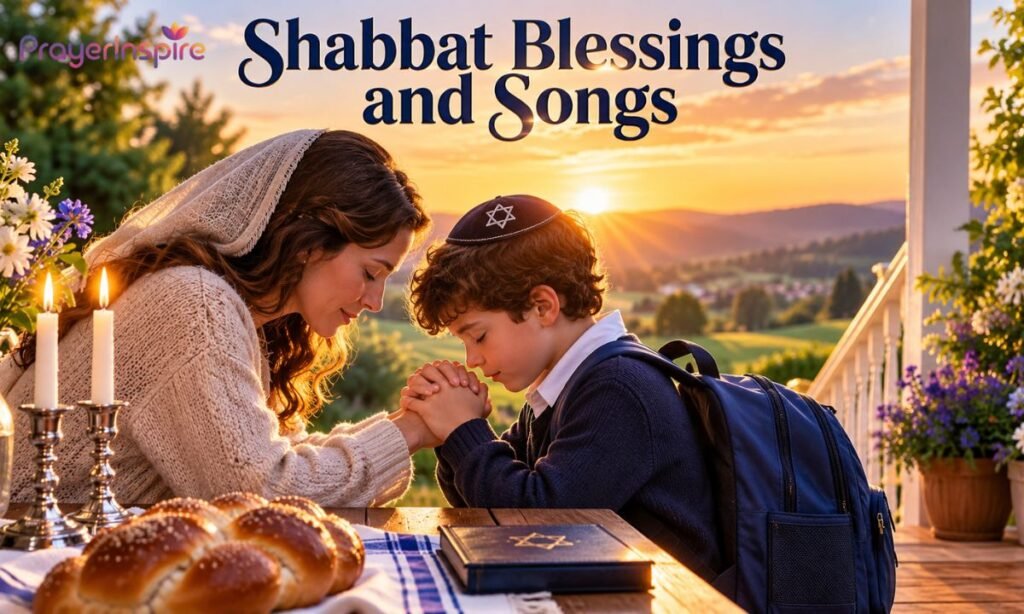
Friday night brings rest, family, and light. Parents bless their children before the meal, then the household sings Shalom Aleichem to welcome peace. Candles get lit first, followed by Kiddush over wine, which sanctifies the day.
- Hadlakat Nerot, the candle lighting blessing
- Shalom Aleichem, welcoming peace into the home
- Kiddush, sanctifying Shabbat over a cup of wine
- Eshet Chayil, praising a woman of valor
- Birkat HaBanim, a parent’s blessing over children
- Lecha Dodi, a hymn welcoming the Shabbat bride
- Mizmor Shir LeYom HaShabbat, the Shabbat day psalm
- Yah Ribon, a table song of praise and longing
- Tzur Mishelo, a grace after the Shabbat meal
- Kah Ribon Olam, sung between courses on Friday night
Prayers Before Meals
Jewish tradition treats eating as a sacred act. Before bread, you say HaMotzi, thanking God for bringing forth food from the earth. Other blessings cover fruit, vegetables, and grains, each one specific to what’s on the plate.
- HaMotzi, the blessing over bread
- Borei Peri HaEtz, the blessing over fruit
- Borei Peri HaAdamah, the blessing over vegetables
- Shehakol, the blessing for foods outside other categories
- Borei Minei Mezonot, the blessing over grain products
- Borei Peri HaGafen, the blessing over wine or grape juice
- Al Netilat Yadayim, hand washing before bread
- Shehecheyanu, thanking God for a new or seasonal food
- Baruch Dayan HaEmet, said upon hearing difficult news
- HaTov VeHaMeitiv, thanking God for good news shared with others
Read More : 110+ Adoration Prayers
Prayers After Meals
Gratitude doesn’t stop when the plate is empty. Birkat Hamazon, the Grace After Meals, thanks God for food, land, and Jerusalem in four full blessings. Shorter versions exist for smaller snacks.
- Birkat Hamazon, the full grace after a bread meal
- Al HaMichyah, a shorter grace after grain snacks
- Borei Nefashot, a brief blessing after most other foods
- HaRachaman, the added mercy requests within the grace
- Bonei Yerushalayim, a blessing for Jerusalem’s rebuilding
- Zan Et HaKol, praising God who feeds all creation
- Nodeh Lecha, thanking God for the promised land
- HaZan, the opening blessing of thanks for nourishment
- Uvneh Yerushalayim, a plea for peace and restoration
- Oseh Shalom, closing many prayers with a wish for peace
Bedtime Shema and Nighttime Prayers
Night prayers hand the day back to God. The Bedtime Shema, or Kriat Shema Al HaMitah, includes forgiveness for the day’s mistakes and a request for peaceful sleep. Children often learn a simple version first.
- Kriat Shema Al HaMitah, the full bedtime Shema
- Hamalach HaGoel, asking for angelic protection overnight
- Ribono Shel Olam, a personal plea before sleep
- Adon Olam, a hymn about God’s eternal presence
- Yiheyu LeRatzon, a closing line asking words be accepted
- Baruch Atah BeShochbecha, a blessing for lying down safely
- V’Shamru, remembering the Shabbat covenant at night
- Hashkiveinu, asking for a peaceful night’s rest
- Al Yad Kol Chai, entrusting the soul into God’s hand
- Birkat Kohanim, the priestly blessing recited before sleep
Prayers for Healing and Comfort
Illness calls for words that hold both hope and honesty. Mi Shebeirach is the traditional prayer asking for healing of body and spirit. It names the person and, often, their mother’s name.
- Mi Shebeirach, the traditional prayer for healing
- Refuah Shleimah, a wish for complete recovery
- Tehillim 121, a psalm asking where help comes from
- Tehillim 23, a psalm of comfort through hardship
- El Na Refa Na Lah, Moses’s short prayer for his sister
- Birkat HaGomel, thanks after surviving danger or illness
- Tefillat HaDerech, said before travel to a hospital
- Ana BeKoach, a mystical prayer invoking divine strength
- Shiviti Hashem, a reminder of God’s constant presence
- Yehi Ratzon, a personal wish spoken before other prayers
Wedding Blessings Sheva Brachot
Weddings carry seven blessings, called Sheva Brachot, recited under the chuppah and again at meals during the week that follows. They move from creation itself to the joy of the bride and groom.
- Borei Peri HaGafen, the wine blessing at the ceremony
- Shehakol Bara LiChvodo, praising God as creator of all
- Yotzer HaAdam, honoring the creation of humankind
- Asher Yatzar et HaAdam, on human beings made in God’s image
- Sos Tasis, praying for the couple’s shared joy
- Sameach Tesamach, asking for lasting happiness together
- Baruch Atah Hashem Mesameach Chatan, the closing joy blessing
- Kol Sasson, a wish to hear joy in the streets again
- Me’ein Sheva, a shortened weekday version of the seven blessings
- Simchat Chatan V’Chalah, celebrating the couple’s new life
Prayers for New Babies
A new child brings its own set of blessings. At a baby naming or brit milah, families often add Yehi Ratzon wishes for the child’s future path.
- Birkat HaGomel, thanks after a safe childbirth
- Yehi Ratzon LeGidul, a wish for the child’s healthy growth
- Kel Malei Rachamim, invoked for protection in early life
- HaTov VeHaMeitiv, thanking God for the good news of birth
- Baruch HaBa, welcoming the baby into the covenant
- Birkat Kohanim, the priestly blessing over the newborn
- Simcha Tinatzeach, a wish that joy overcome hardship
- Elohai Neshamah, adapted as a prayer for a pure new soul
- Zeh HaYom, marking the day as one of celebration
- Yeladeha K’shetilei Zeitim, a wish for children like young olive trees
High Holy Day Prayers
The High Holy Days bring the year’s most solemn prayers. Avinu Malkeinu, meaning Our Father, Our King, repeats through Rosh Hashanah and Yom Kippur services with growing intensity.
- Avinu Malkeinu, a repeated plea for mercy and forgiveness
- Kol Nidre, the solemn opening prayer of Yom Kippur
- Unetaneh Tokef, describing who shall live and who shall pass
- Al Chet, a confession of wrongdoing recited communally
- Ashamnu, a shorter alphabetical confession of sins
- Hayom Harat Olam, marking the world’s symbolic birthday
- Malchuyot, declaring God’s kingship on Rosh Hashanah
- Zichronot, recalling God’s memory of the people
- Shofarot, the blessings tied to the sounding of the shofar
- Ne’ilah, the closing prayer as Yom Kippur’s gates shut
Prayers for Mourning Kaddish
Loss calls for structure and community. The Mourner’s Kaddish doesn’t mention death at all. Instead, it praises God, spoken daily for eleven months and said in a group of ten or more.
- Kaddish Yatom, the Mourner’s Kaddish recited daily
- Kel Malei Rachamim, asking for the soul’s peaceful rest
- Tzidduk HaDin, accepting the justice of loss
- Tehillim 23, read often at funerals for comfort
- Tehillim 121, a psalm of watchfulness over the departed
- HaMakom Yenachem, the traditional line of condolence
- Yizkor, the memorial prayer said on major holidays
- El Malei Rachamim, chanted at the graveside
- Baruch Dayan HaEmet, said upon first hearing of a death
- Menuchah Nechonah, a wish for the soul’s proper rest
Travel and Safety Prayers
Before any trip, tradition offers words for the road. Tefillat HaDerech, the Traveler’s Prayer, asks for a safe route and a safe return.
- Tefillat HaDerech, the traveler’s prayer for safe passage
- Shomer Yisrael, asking God to guard the people
- Birkat HaGomel, thanks after arriving safely from danger
- Malachim, invoking angels for protection on the way
- Yevarechecha, calling on the priestly blessing before departure
- Tehillim 91, a psalm of shelter and refuge
- Hamalach HaGoel, the protecting angel invoked for travel
- Sheluchei Mitzvah, a note that those on a good errand are protected
- V’Yiten Lecha, a blessing of favor added before long journeys
- BeShem Hashem, opening a private prayer before setting out
Everyday Blessings and Gratitude
Ordinary moments deserve blessing too. There’s a line for thunder, one for a rainbow, and one just for seeing an old friend again.
- Shehecheyanu, thanking God for reaching a new moment
- Baruch Dayan HaEmet, accepting hard news with faith
- HaTov VeHaMeitiv, for good news that helps others too
- Oseh Ma’aseh Bereishit, said upon seeing lightning
- Shekocho U’gevurato, said upon hearing thunder
- Zocher HaBrit, said upon seeing a rainbow
- Baruch Chacham HaRazim, said seeing a large crowd
- Mechayeh Hametim, said meeting a friend after a year apart
- Shenatan MeiChochmato, said upon meeting a Torah scholar
- Al HaKol, a general phrase of thanks for everything received
How to Use These Prayers
Start small. Pick one prayer that fits your day, like Modeh Ani in the morning or HaMotzi at dinner. Prayer messages work well in texts to someone who’s sick or celebrating.
Daily blessings can anchor a routine, said the same time each day. Use wishes for loved ones at birthdays, weddings, or during hard news. Group settings, like a family dinner or a shiva house, call for family and group messages everyone can join.
When someone needs a lift, a line of encouragement drawn from Tehillim carries real weight. You don’t need perfect Hebrew. A sincere heart matters more than flawless pronunciation.
Frequently asked Questions
What is the most important Jewish prayer?
The Shema holds the top spot. It states the core belief in one God and gets recited morning and night.
Can non-Hebrew speakers say these prayers?
Yes. Many prayers have English translations, and sincerity matters more than perfect pronunciation. Transliterations help too.
Do you need a synagogue to pray?
No. Most of these prayers work at home, at meals, before sleep, or during travel. A minyan is only required for a few, like the Mourner’s Kaddish.
Conclusion
Jewish prayer touches every part of life, from the first breath in the morning to the quiet words said at night.
These 112+ prayers offer something for gratitude, grief, celebration, and everyday moments in between. Keep this list close, and let the right words find you when you need them.
